All caregivers are involved in educating Courtenay students, and we can learn from one another. Please join us for a BAC or PAC meeting to share your expertise. What follows are resources that caregivers and teachers have shared.
Reading in your native language
You don’t need to speak English to raise a strong reader, reading in any language helps.
“While it is important to encourage and support your child’s efforts to learn English, research shows that children who are read to in their native language (such as Spanish) will have an easier time learning to read in their second language (such as English).”
— Lydia Breiseth, Colorín Colorado
All families can help their children become readers. The following videos are recorded in English and Spanish, with subtitles in any language.
En español · Alfabetización en familia




In English · Family literacy at home






Partnering with your child’s teacher
You don’t need to prepare a speech to meet your child’s teacher, you just need goals.
“Questions to ask at a parent-teacher conference might include: Is my child meeting expectations? How does my child compare to others in basic skills? If my child is struggling, what has been tried to improve their performance? What else can be done at home or at school? What are my child’s strengths? How are they doing socially?”
CPS gives three tips for that conversation:
- Help the teacher get to know your child. Share family values and preferred activities. Share areas where they are doing well and note areas where they need help. Share what makes them shine; and share any important changes in their life or behavior.
- Discuss academic progress. Ask about recent data (including grades and test results) and what the data says about your child’s current strengths and challenges. Ask what teachers will be doing this year to inspire academic progress, ask if your child is at grade level in math, reading, and other subjects, and ask what key skills they are expected to learn this year.
- Team up on a plan. Discuss how to support academic skills at home and, if needed, ask for resources. Share what helps your child stay motivated at home, and ask about the next opportunities to touch base on progress.
En español · Hablar con el maestro — y abogar por su hijo
Una educadora de Texas explica por qué la conferencia es una conversación de dos vías, qué preguntas hacer y su derecho por ley a un intérprete (algunos detalles son específicos de Texas; para Chicago, vea Su escuela, sus derechos). Otro buen video: Escuche, Aprenda y Abogue, una charla de MCPS.
In English · Partnering with a teacher is powerful
“Teacher’s working conditions are student’s learning conditions.” – Cecile Carrol
You have the right to a free interpreter at any conference, and it’s important that your child does not translate for you. See Your School, Your Rights.
More resources
- Colorín Colorado — conference tips for families in English and español, plus family resources in 13 languages
Bridges: Courtenay’s PreK through 5th math program
Courtenay begins conceptually preparing students for middle school algebra from the moment they enter Kindergarten. Don’t be surprised to see your five year old solving for X.
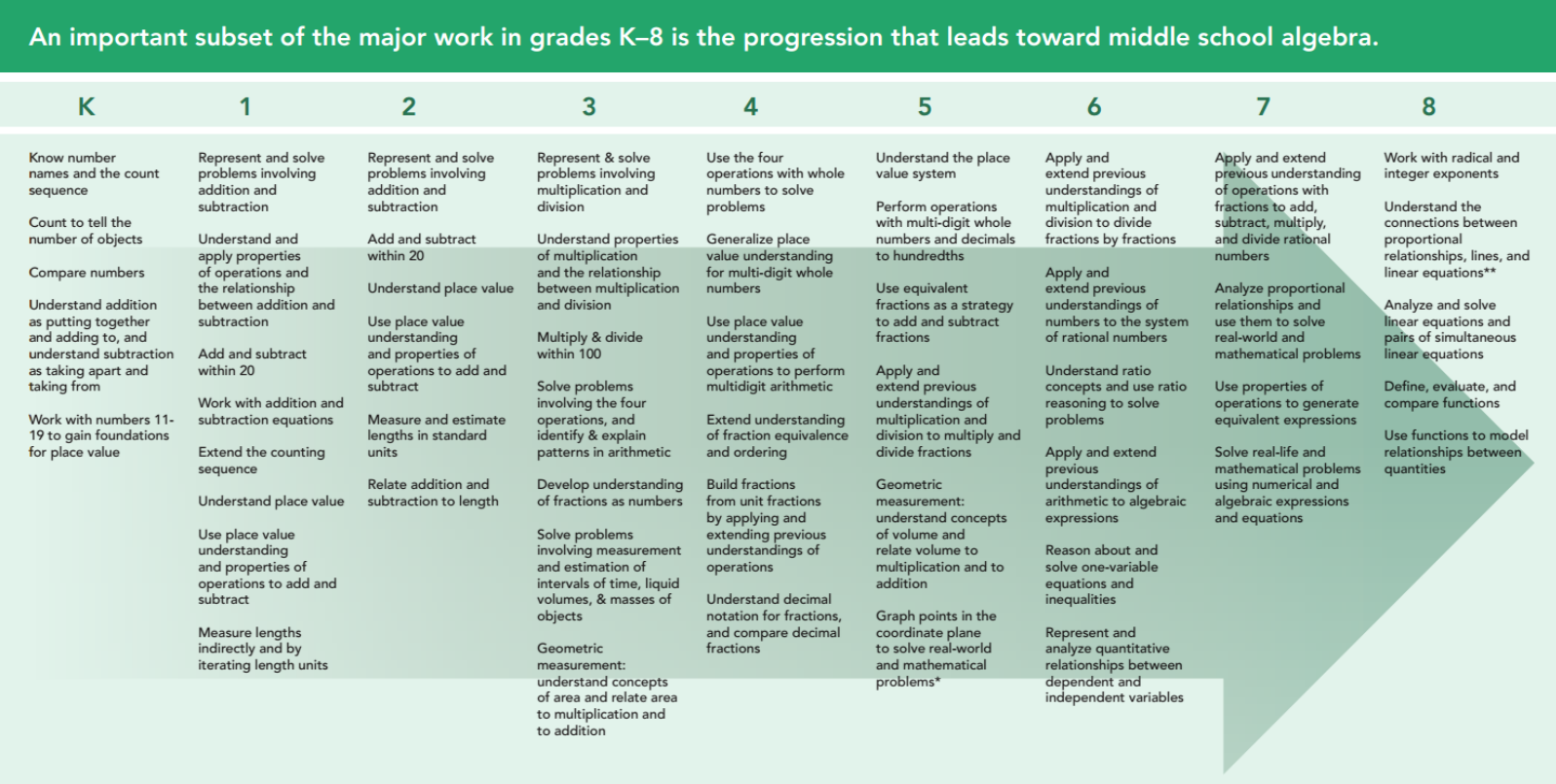
“Bridges in Mathematics” is a math program that Courtenay’s teachers voted for, as it encourages hands-on, full-class problem solving with lots of discussion and visual models. Don’t try and push your student to use a single solution, as Courtenay students prove their conceptual understanding in many ways.
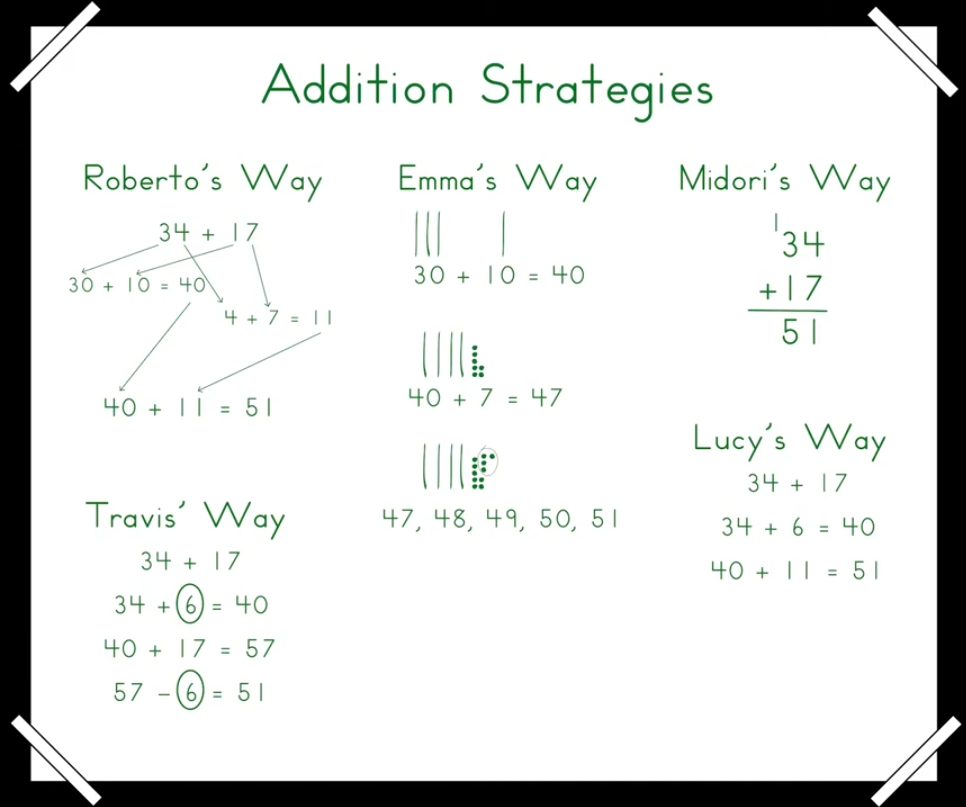
What a Bridges classroom looks like and how to support it at home: Family Support page.
Speed isn’t math: slow down
“Focus on understanding, not speed.”
— Jennifer Bade, Courtenay MTSS/Math Specialist
“There is a common and damaging misconception in mathematics – the idea that strong math students are fast math students. … When students are stressed, such as when they are taking math questions under time pressure, the working memory becomes blocked and students cannot access math facts they know.”
— Jo Boaler, Stanford youcubed


Speed isn’t math! Some of the world’s best mathematicians reason slower than most people. Recent research has shown there’s no such thing as a “math person” and everyone can learn high level mathematics.
You don’t have to know the answers to your child’s homework, just ask your child to explain how they could solve it and listen. Their explanation is the practice, whether they arrive at the answer or not, and it slows everyone down in the best way.- Fun math-focused shows for you and your student: Cyberchase en Español · Cyberchase in English (PBS KIDS, 1st–6th grade) · PBS Math Club (tweens/teens)